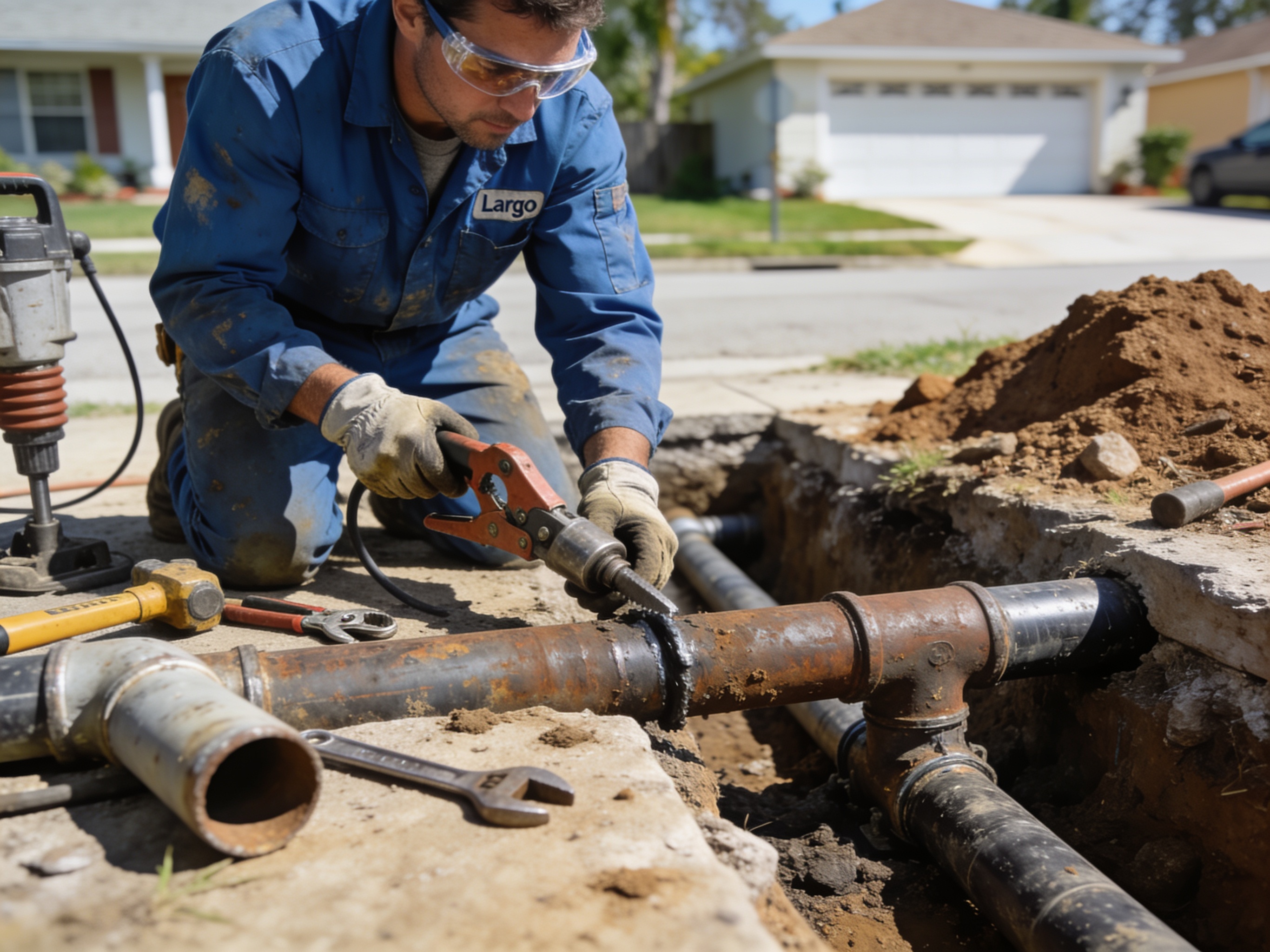
Largo homes built before the 1980s in neighborhoods like Ridgecrest and Walsingham often rely on cast iron sewer lines that corrode from the inside out due to the area's humid subtropical climate and acidic soil common across Pinellas County. Hot summers accelerate condensation inside pipes while mild winters keep groundwater levels high, pushing roots toward joints. Replacement requires excavating through sandy soil that collapses easily, so crews typically use trenchless methods or targeted open trenches near the home's cleanout to limit damage to yards near Largo Central Park.
When cast iron fails, homeowners in Downtown Largo and nearby Seminole frequently notice slow drains or gurgling toilets first. Pinellas County building codes now require Schedule 40 PVC or ABS for replacements, and any work that crosses property lines must be permitted through the county. Skipping permits can delay sales because inspectors flag unpermitted sewer work during title searches. Crews also check for bellied sections caused by shifting fill dirt around older slabs, a common issue in Walsingham where many lots were developed on former agricultural land.
Drain pipe replacement in Clearwater-adjacent areas of Largo often involves tying new lines into the main at the street, which sits deeper here than in flatter parts of the county. Cast iron repair is sometimes possible with epoxy lining on straight runs, but once the pipe shows widespread rust scaling or multiple cracks, full replacement prevents repeat backups during heavy summer rains. Local plumbers keep extra fittings on trucks because the original 4-inch and 6-inch cast iron sizes vary by decade of installation.
Work near the Pinellas Trail right-of-way adds another layer because county permits require restoration to trail standards if excavation disturbs the path. Homeowners in these zones should expect longer timelines when the line runs under mature landscaping common around Florida Botanical Gardens properties.
Technician insight
In Largo the thing that catches most people out with cast iron pipe replacement is how quickly the sandy soil caves in once you start digging near older slabs in Ridgecrest; one rain and the trench walls are gone, so we always stage extra shoring even on short runs.
Ridgecrest Cast Iron Lateral Failure
Homeowner reported recurring backups after heavy rain. Camera showed a collapsed section of 1950s cast iron under the driveway. We excavated a single pit at the cleanout, replaced 18 feet of line with PVC, and restored the concrete without disturbing the rest of the yard.
How it works
- 1
Camera Inspection
Technician runs a camera from the cleanout through the cast iron line to locate cracks, bellies, and root intrusion while noting depth and proximity to structures.
- 2
Permit and Locate
Pull required Pinellas County permit and mark all underground utilities before any digging begins on the property.
- 3
Excavation or Trenchless Access
Open targeted pits or set up trenchless equipment depending on pipe condition and yard layout in the specific Largo neighborhood.
- 4
Pipe Replacement and Tie-In
Remove failed cast iron sections and install new PVC or ABS, connecting to the existing lateral with proper slope and cleanout access.
- 5
Backfill and Test
Backfill with native sand, compact in lifts, and run a final camera and water test to confirm flow before restoring landscaping.
Pricing
Pricing varies with access, depth, and whether trenchless methods are feasible; most Largo jobs fall into mid to upper residential range.